← Research

Carbon Policy, Markets & Urban Resilience
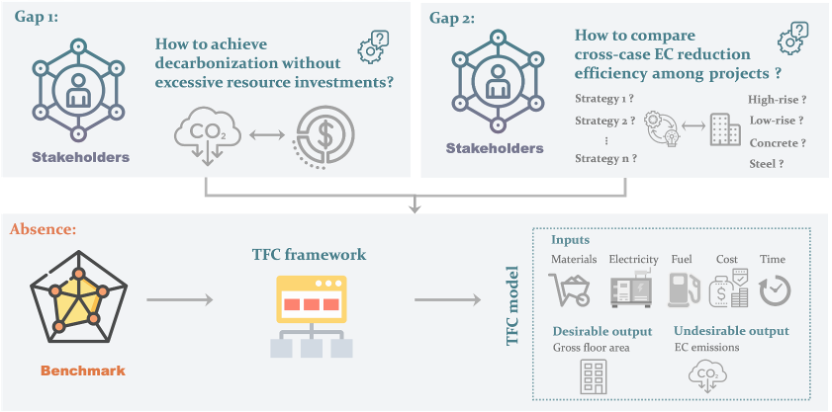
Research gaps in embodied carbon reduction and the total factor carbon (TFC) framework, with inputs (materials, electricity, fuel, cost, time), gross floor area as desirable output and embodied carbon emissions as undesirable output

Develop a total factor carbon (TFC) framework that adopts a total factor perspective on building projects. Provide a quantitative tool that helps stakeholders make informed decisions on efficient and actionable carbon reduction strategies from a comprehensive, multidimensional perspective.
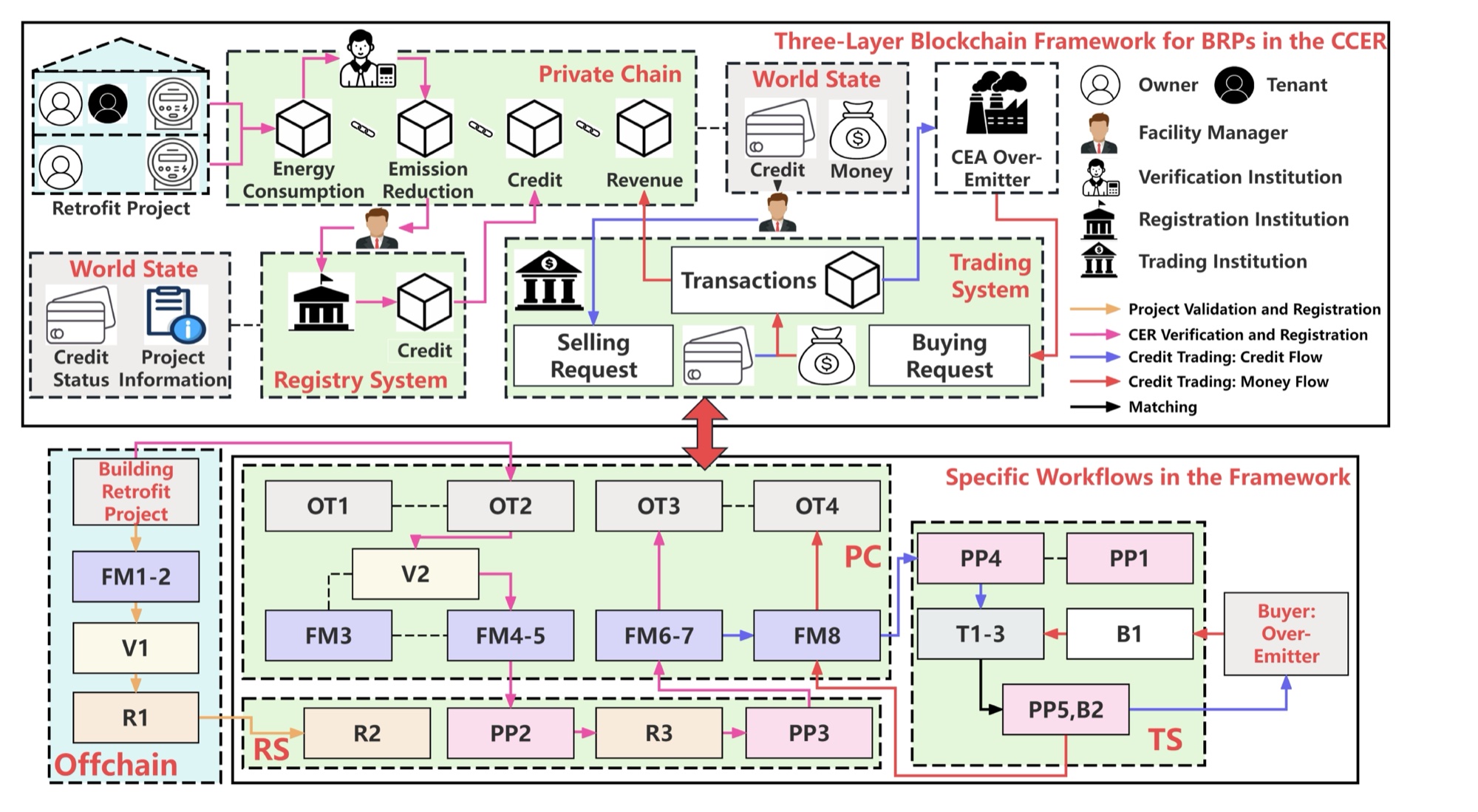
Three-layer blockchain framework for building retrofit projects in the CCER carbon market: a private chain recording energy consumption, emission reduction, credit and revenue, a registry system and a trading system, with the specific workflows among owners, facility managers, verification, registration and trading institutions

Leverage blockchain-based smart contracts and consensus mechanisms to automate participation in carbon markets and incentivize participants to reduce emissions.
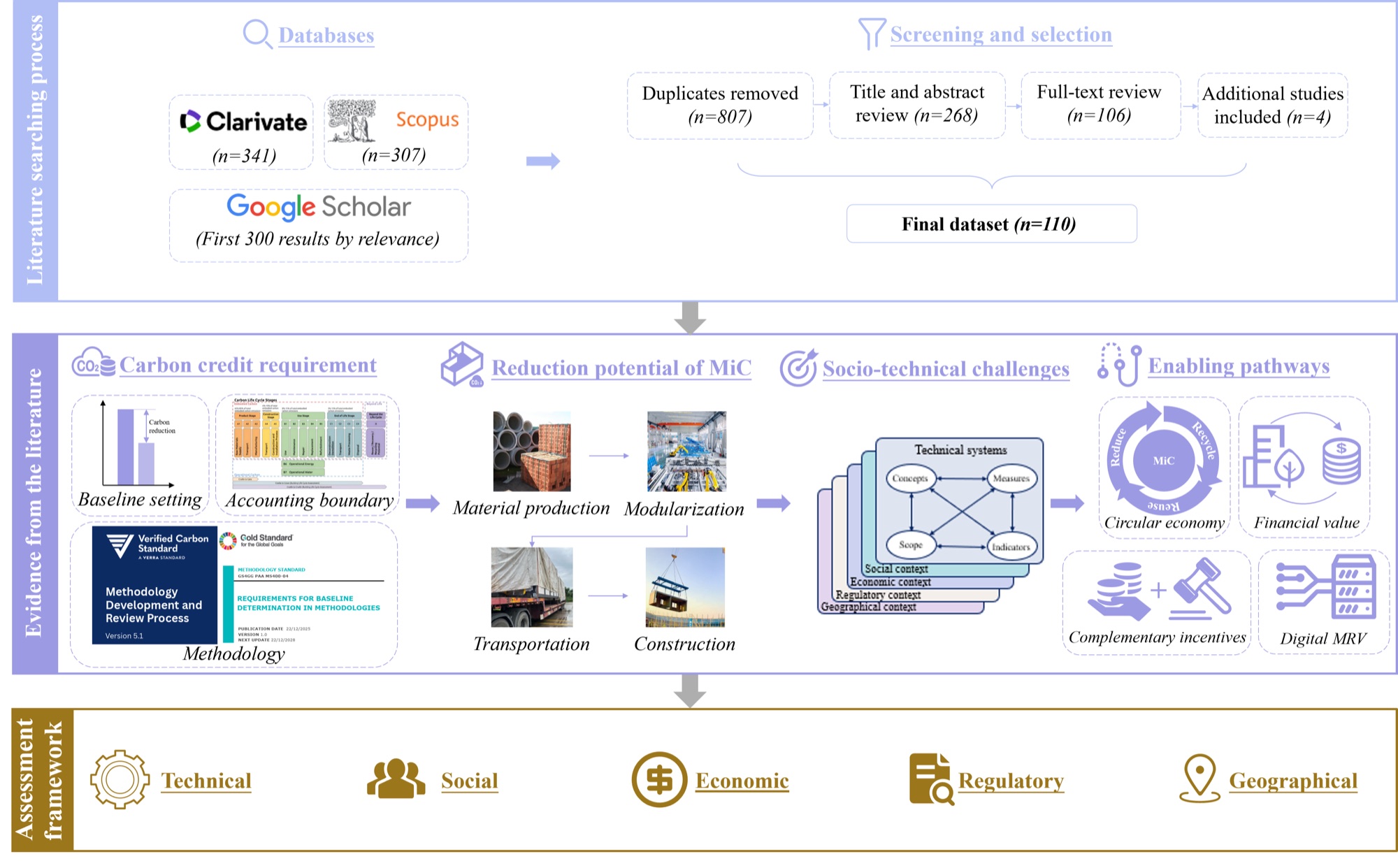
Systematic review workflow: Web of Science, Scopus and Google Scholar screening to 110 studies, evidence on carbon credit requirements, MiC reduction potential, socio-technical challenges and enabling pathways, and a technical, social, economic, regulatory and geographical assessment framework

Conduct a systematic literature review on MiC and carbon credit mechanisms to synthesize existing research themes and identify the key challenges and enabling pathways for MiC carbon credit development. Propose a preliminary indicator-based diagnostic framework to translate these findings into observable and measurable indicators.